Nastenka
Nastenka is the young woman whose arrival in the Dreamer's solitary life gives the novella "White Nights" its emotional center and its defining conflict between dream and reality. A seventeen-year-old orphan living with her blind grandmother, she is at once trapped by circumstance and bold in her desires, and her story—of waiting for a promised lover, confiding in a stranger, and ultimately choosing the real over the ideal—exposes the fragility of human connection and the strange generosity of unrequited love.
Identity and Imprisonment
Nastenka lives with her blind grandmother in a small wooden house with three windows, the family's only property. Her parents are dead, and she came into her grandmother's care as a little girl. The grandmother, once wealthier and now nostalgic for "the old days," keeps Nastenka physically bound to her by a pin that fastens Nastenka's dress to her own, a practice begun when Nastenka was fifteen and had gotten into minor mischief. "She took a pin and pinned my dress to hers, and said that we should sit like that for the rest of our lives if, of course, I did not become a better girl." For two years Nastenka has sat beside the blind woman, sewing, reading aloud, and knitting, unable to move freely. She once tried to deceive her grandmother by having the deaf charwoman Fyokla sit in her place, but the ruse was discovered, and the punishment only tightened the restriction. The grandmother also enforces a strict moral code: when the lodger offers French books, she insists they must be "moral books," warning Nastenka that such novels describe how "young men seduce virtuous girls" and abandon them. Despite this confinement, Nastenka has received some education—a teacher was hired for her, and she has read Walter Scott and Pushkin, which feed her imagination and her longing for a different life.
The Secret Romance with the Lodger
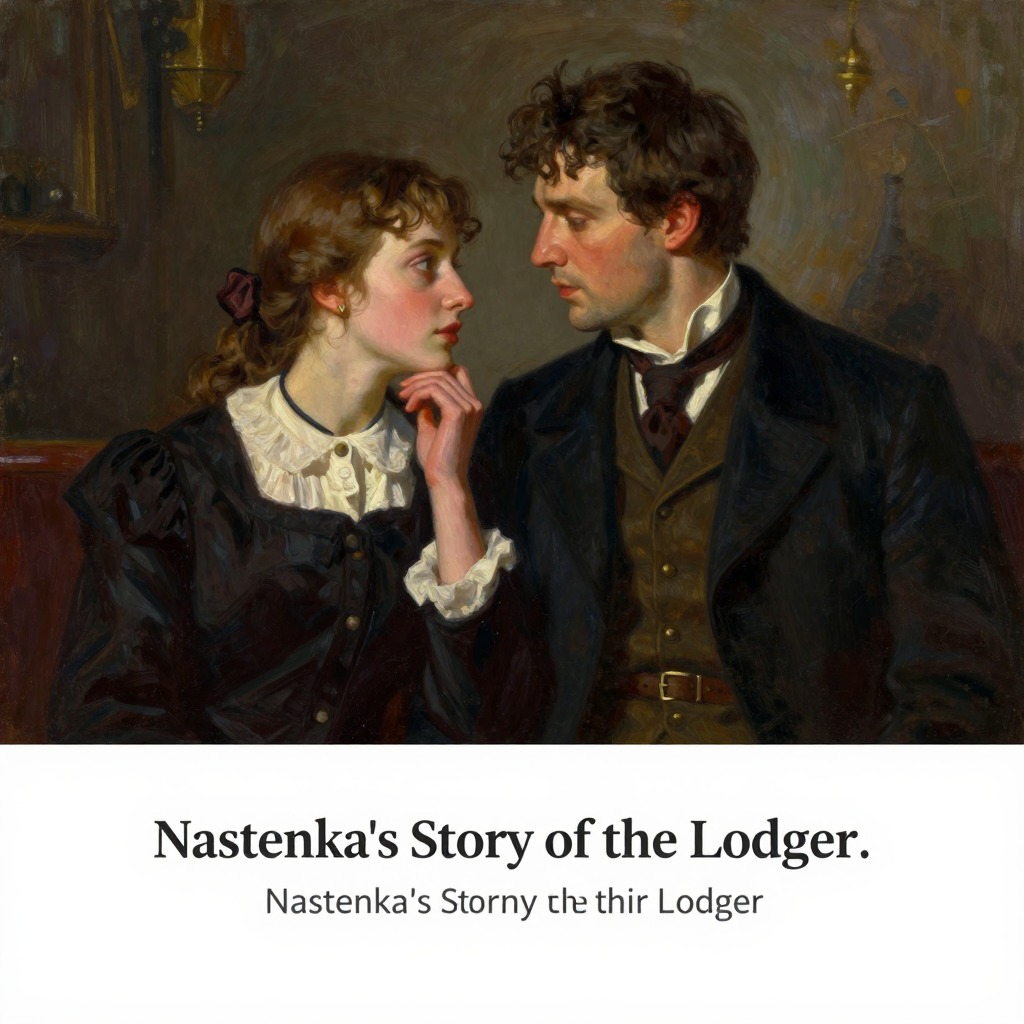
A young man, a stranger not from Petersburg, rents the upper floor of the grandmother's house. He is quiet, grave, and handsome, and Nastenka notices him. When he first visits their rooms to discuss papering, Nastenka, forgetting she is pinned, jumps up so abruptly that the grandmother's chair moves, revealing her predicament. She blushes and cries with shame, and the lodger, understanding, bows and leaves at once. After a fortnight, he sends Walter Scott's novels through Fyokla, and Nastenka and her grandmother read them together. He sends Pushkin as well, and Nastenka finds herself unable to do without books, abandoning her earlier fantasies of marrying a Chinese prince. She meets him on the stairs; he asks if she is dull, and she admits she has no friends. He proposes taking her to the theatre secretly, but she refuses to deceive her grandmother. Instead, he invites the grandmother as well, and they attend "The Barber of Seville" together. Nastenka is overwhelmed by joy, but after that, the lodger visits only about once a month, always to invite them to the theatre. She grows restless, thin, and nearly ill. A year ago, in May, he announces he must return to Moscow for a year. Desperate, Nastenka packs her belongings and goes to his room, declaring she cannot live without him. He tells her he is poor, has no decent position, and cannot marry her now, but promises: "if I am ever in a position to marry, you shall make my happiness." He asks her to wait one year. They agree to tell the grandmother nothing, and he leaves.
The Encounter with the Dreamer and the Confession
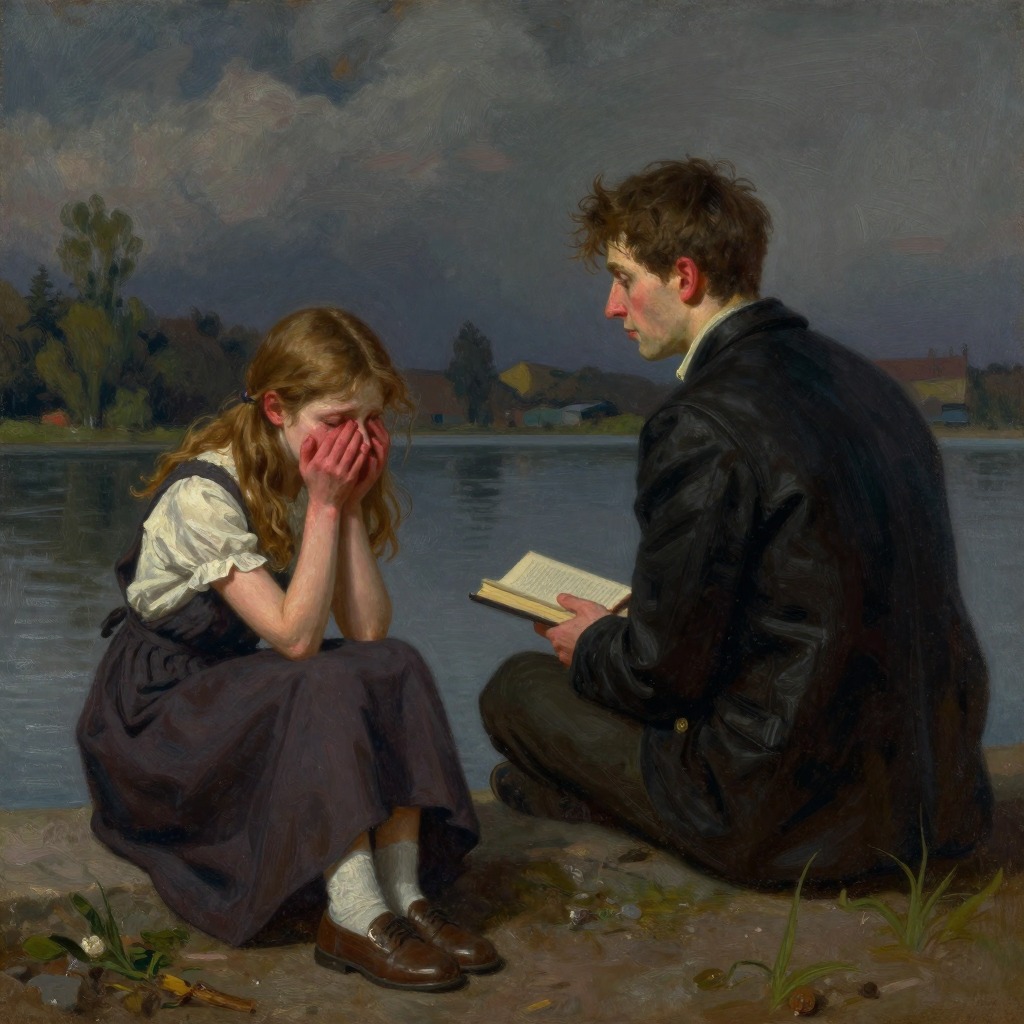
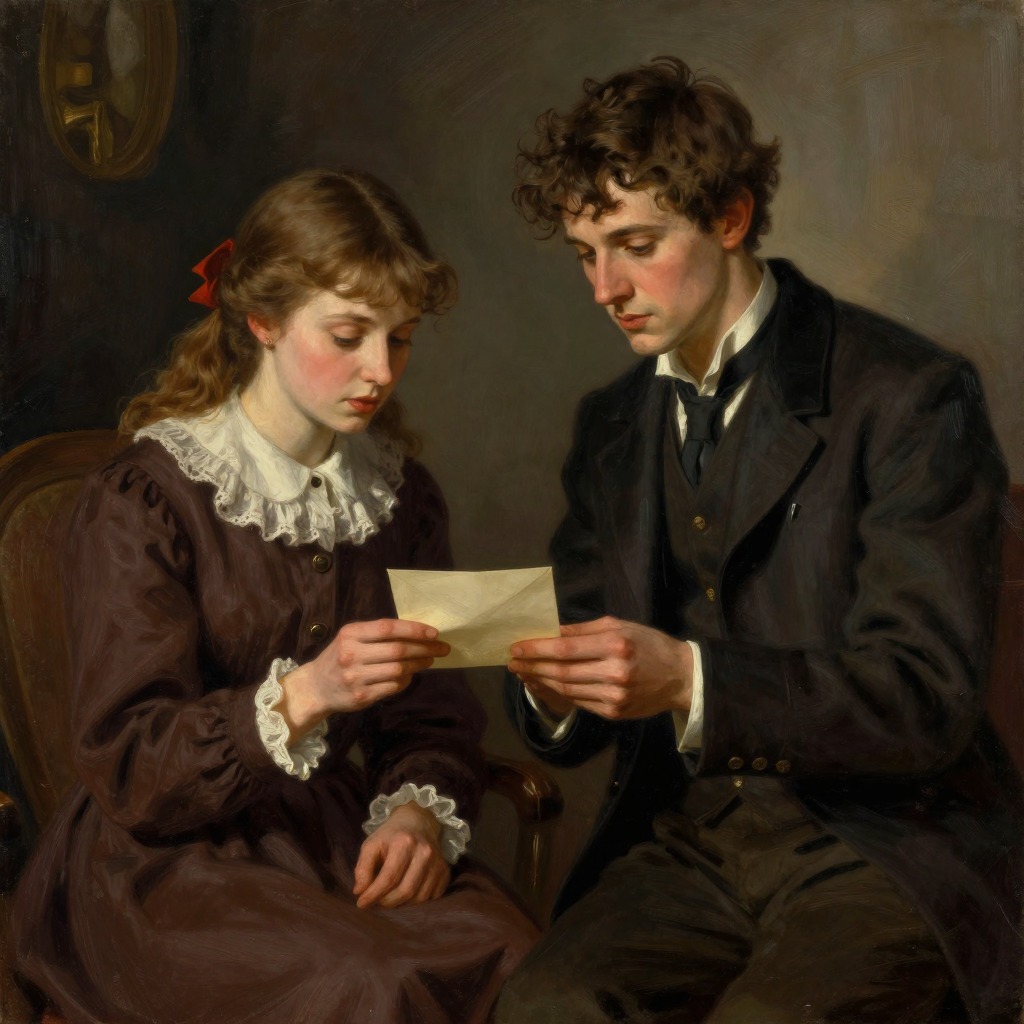
On the first night of the story, the Dreamer, walking along the Canal Embankment, finds Nastenka leaning on the railing, crying. She is wearing a charming yellow hat and a black mantle. When a drunken gentleman pursues her, the Dreamer intervenes with his knotted stick, and she accepts his arm. She is dark-haired, with tears on her black eyelashes, but a smile already gleams on her lips. She tells him she likes his timidity, and they agree to meet the next evening at ten o'clock on the same spot. She makes him promise not to fall in love with her, but offers friendship. On the second night, she asks him to tell his history, and he delivers a long, self-lacerating confession about being a dreamer, a type who lives entirely in fantasy. She listens with amazement, wiping away tears, and declares, "Now we shall be two together. Now, whatever happens to me, we will never part." She then tells her own story—the grandmother, the pin, the lodger, the promise, and the year of waiting. The lodger has been back in Petersburg for three days but has not appeared. The Dreamer, moved, suggests she write a letter, and she produces one already written and sealed. He delivers it for her. On the third night, a rainy day, she does not come. On the fourth night, she is waiting, but there is no answer. She breaks down, sobbing that she has been cruelly abandoned. The Dreamer, unable to contain himself, confesses his love. Nastenka, after a moment of confusion, responds: "I love you! I love you as you love me; I have told you so before, you heard it yourself—I love you because you are better than he is, because you are nobler than he is." She accepts his love, and they plan a future together: he will rent the empty upper floor of her house, they will take the grandmother with them, and he will soon receive his salary. They walk in a delirium of happiness, laughing and crying, planning their life.
The Return of the Lodger and the Letter
As they walk, a young man passes and stops. Nastenka cries out, tears herself from the Dreamer's arms, and rushes to the lodger. Before leaving, she turns back, throws her arms around the Dreamer's neck, and gives him a warm, tender kiss. Then she takes the lodger's hand and draws him away. The Dreamer is left alone. The next morning, he receives a letter from Nastenka. She begs his forgiveness, explaining that she deceived both herself and him: "It was a dream, a mirage." She still loves him, she writes, but her heart has always belonged to the lodger, who has returned in love and never forgotten her. She will marry him in a week. She asks the Dreamer to remain a friend and brother, to visit them, and to forgive her. She ends with a plea: "Oh, love me, do not forsake me, because I love you so at this moment, because I am worthy of your love, because I will deserve it." The Dreamer reads the letter over and over, tears falling, and finally accepts his fate.
Thematic Significance
Nastenka embodies the novella's central tension between the dream and the real. She is herself a dreamer—she admits she used to imagine marrying a Chinese prince—but unlike the Dreamer, she acts on her desires. She writes the letter, she goes to the lodger's room, she accepts the Dreamer's love in a moment of despair, and she returns to her first love without hesitation. Her capacity for both deep constancy and sudden change reveals the unpredictability of human emotion. The Dreamer, in his final blessing, renounces any bitterness: "May your sky be clear, may your sweet smile be bright and untroubled, and may you be blessed for that moment of blissful happiness which you gave to another, lonely and grateful heart!" Nastenka's gift to him is not love returned but a single moment of genuine connection, which he declares enough for a whole man's life. She is the catalyst that forces him out of his fantasy world and into a confrontation with reality, leaving him, ultimately, with a memory that is both painful and precious.